WALGLAS manufactures and supplies PVC free foam board for sign makers, print shops, display fabricators and sheet distributors. Our range includes white and colored sheets, with thickness, density and sheet size selected around your printing, cutting and installation requirements. Use this page to compare available formats, review fabrication considerations and identify what we need for an accurate quotation. For a new application, start with a free A4 sample and test it with your own inks, tools and fixing method. Then send your size, thickness, density, color, quantity and destination.
-
![PVC Cabinet Foam Board]() PVC Cabinet Foam BoardPVC cabinet foam board is a cabinet board made of polyvinyl chloride (PVC), whose surface has a similar appearance and texture to wood. It is made by injecting gas and chemical blowing agent inside the PVC sheet for foaming treatment, thisread more
-
![High Density PVC Foam Board]() High Density PVC Foam BoardHigh-density PVC foam board has the characteristics of high quality and high physical properties, and can be specially prepared. Designed to be easy to use, weatherproof and provide good insulation properties, in addition, it has superiorread more
-
![White Rigid Plastic PVC Foam]() White Rigid Plastic PVC FoamMinimum Order Quantity :18sheets/colors/sizes/thicknessThickness:1-30mmSize: 1220*1830 1220*2440 2050*3050,etcMaterial:PVCBrand:WALGLASCard size samples are free of chargeread more
-
![PVC Foam Board Wall Panel]() PVC Foam Board Wall PanelMinimum Order Quantity :30sheets/colors/sizes/thicknessThickness:1-35mmSize:915*1830mm(3' x 6') 1220*2440mm(4' x 8') 1560*3050mm(5' x 10') 2050*3050mm(6.7' x 10'),etcMaterial:PVCBrand:WALGLASCard size samples are free of chargeread more
-
![White Waterproof PVC Foam Board]() White Waterproof PVC Foam BoardMinimum Order Quantity :100sheetsThickness:1-35mmSize: 915*1830mm(3' x 6') 1220*2440mm(4′ x 8′) 1560*3050mm(5' x 10') 2050*3050mm(6.7' x 10'),etcMaterial:PVCBrand:WALGLASCard size samples are free of chargeread more


PVC Free Foam Board Overview
PVC free foam board is an expanded polyvinyl chloride sheet used for fabricated signs, display panels and selected interior components. “Free foam” describes the manufacturing process: the PVC compound expands during extrusion to form a closed, cellular core. The material still contains PVC; the name does not mean a PVC-free alternative.
For purchasing, the differences that matter are thickness, density, face condition and suitability for the intended fabrication method. Two sheets of the same nominal thickness can differ in weight and handling. A useful specification therefore states both the dimensions and the performance you need from the finished panel.
Buyers in advertising, display and furniture manufacturing use foamed PVC as a lightweight, printable and machinable alternative to wood-based panels in many indoor applications. WALGLAS supplies this category as part of its wider PVC board range. If you are comparing surface structures, also review our PVC Celuka Foam Board. Select the process around the application, then confirm the grade and a sample before ordering.
Advantages of PVC Free Foam Board
Lower Panel Weight
The cellular structure reduces weight compared with solid PVC of the same dimensions, so large display panels are easier to handle during cutting, assembly and installation. When comparing suppliers, request the density and calculated sheet weight, so that freight estimates and handling plans use the same specification.
A Surface for Printed Graphics
Foamed PVC is widely used as a substrate for display graphics. For a printed project, evaluate surface appearance, ink adhesion and color reproduction on a sample of the proposed grade. The result depends on the whole print system, including preparation, ink chemistry, curing settings and the condition of the sheet.
Moisture Resistance for Interior Components
PVC does not respond to moisture the way untreated wood-based panels do, so it is worth considering for humid indoor settings such as washrooms, kitchens and retail counters. For wall or furniture parts, evaluate the whole assembly, including adhesives, fasteners and supporting structure, and state the cleaning conditions and any direct water exposure when you discuss a project.
Practical Mechanical Fabrication
Sheets can be cut, drilled and routed with suitable tools and settings, which supports rectangular panels, lettering, display parts and shaped components. Tool selection should reflect the actual thickness and operation; approve edge quality and dimensional accuracy on a trial part before batch production.
Specification Options for Different Jobs
Thickness, density and sheet format let buyers balance handling weight, material usage and panel support. A short-term graphic and a repeatedly assembled display may need different selections. Choose against the finished component's use, not on the assumption that a thicker or denser sheet always gives the lowest total project cost.
Documented Performance on Request
Flame behavior, chemical resistance and outdoor suitability depend on the formulation and the installation. Rather than relying on general claims, tell us the standard or market requirement and we will review which documentation covers the proposed grade.
Product Specifications
|
Item |
Catalog range / purchasing information |
|
Material |
Foamed PVC (free foam process) |
|
Sheet size 1: 1220 × 1830 mm (48″ × 72″) |
Thickness 1–30 mm |
|
Sheet size 2: 1220 × 2440 mm (48″ × 96″) |
Thickness 1–30 mm |
|
Sheet size 3: 2050 × 3050 mm (60″ × 120″) |
Thickness 1–20 mm |
|
Density range |
0.3–0.8 g/cm³ |
|
Colors and appearances |
White, black, red, other colors, wood grain and marble effects |
|
Water absorption |
Approx. 0.08% (manufacturer data; test method available on request) |
|
Minimum order quantity |
30 pieces, mixable by color, size and thickness, subject to confirmation for the selected products |
|
Lead time |
Typically 3–25 days, depending on specification and quantity |
|
Samples |
Free A4 samples; larger trial sheets and freight confirmed separately |
|
Packing |
Both faces covered with PE film or kraft paper; stacked on wooden pallets |
|
HS code |
3920510000 |
|
Dimensional tolerances |
To be agreed for the selected product |
|
Special requirements |
Subject to technical review, minimum quantity, production time and price confirmation |
Decorative effects listed in the overall catalog do not establish that every finish is available in every process. Please say whether you need a plain printable face, a colored substrate or a decorative finished panel when you request availability.
Comparing Sheet Weight
Sheet weight in kg ≈ length in m × width in m × thickness in mm × density in g/cm³.
|
Sheet size (mm) |
Thickness (mm) |
Density (g/cm³) |
Nominal weight (kg) |
|
1220 × 1830 |
5 |
0.5 |
5.58 |
|
1220 × 2440 |
3 |
0.5 |
4.47 |
|
1220 × 2440 |
5 |
0.5 |
7.44 |
|
1220 × 2440 |
10 |
0.5 |
14.88 |
|
1220 × 2440 |
10 |
0.7 |
20.84 |
|
2050 × 3050 |
10 |
0.5 |
31.26 |
Selecting the Right Thickness, Density and Format
- Start with the Finished Panel
Send the finished dimensions and explain how the part is supported. A graphic mounted on a continuous backing presents a different problem from a freestanding sign held only at its edges. Include slots, fixing holes, cutouts and unsupported spans in the drawing so that sample evaluation reflects the real construction.
- Specify Density Alongside Thickness
Density affects sheet mass and belongs in every repeatable purchase specification; ordering by thickness alone leaves an important variable open. If you already use a satisfactory board, give its density or a measured sample weight with the dimensions. That is a better starting point than “standard quality.”
- Plan Cutting Yield
Compare sheet sizes against your cutting layout, allowing for tool diameter, trimming and spacing between parts. A larger format may reduce joints or waste, while a smaller sheet may suit your equipment better. Check the printer bed, cutting table and storage dimensions before choosing the format.
- Define the Acceptance Sample
Keep an approved reference for color, face appearance, thickness and processing results. For repeat orders, name the agreed specification on the purchase order, and record any tolerance or cosmetic standard explicitly rather than relying on photographs alone.
Types of PVC Foam Board and Related Options


White sheet is a practical starting point for a printed substrate. Compare whiteness and face appearance under consistent lighting, then run an adhesion and print test. See our White Rigid Plastic PVC Foam listing and request the specification intended for your production equipment.
01
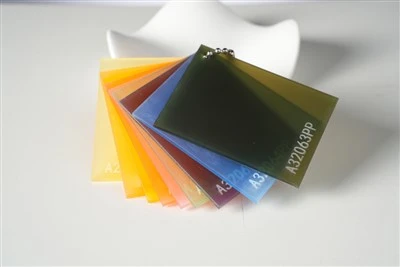
Colored sheet suits letters, decorative display elements and parts where the sheet itself provides the visible color. Approve a physical sample when matching brand colors or combining panels from different deliveries, and say whether both faces and cut edges will remain visible.
02
These effects appear in the wider PVC catalog. Specify the pattern, finish and fabrication method separately, and review film adhesion, edge treatment and cleaning compatibility on the actual construction. Confirm availability before adding a decorative option to a bill of materials.
03
The Celuka process forms a more pronounced dense outer skin around a foamed core. Buyers who need a different face structure should compare a Celuka sample with the proposed free foam sheet.
04
The catalog also lists co-extruded boards, which combine a separately formed surface layer with a foamed core. Ask about this option if you want a different face appearance for decorative parts.
05
Applications of PVC Free Foam Board


Printed Signs and Promotional Graphics
Retail promotions, directional panels and information signs need a substrate that works with the printer and the mounting method. Specify viewing distance, graphic coverage, panel size and location. Check the printed sample after curing and after installation handling, especially if the graphic will be cleaned or moved between sites.
Point-of-Purchase Displays
Display fabricators can evaluate the sheet for graphic panels, shelf messaging, shaped headers and decorative parts. Selection should account for assembly details and anything placed on the display. A full-size prototype reveals movement at joints and unsupported areas that a small swatch cannot.
Exhibition and Event Panels
Exhibition graphics and temporary partitions often combine large printed faces with frames or modular hardware. State how often panels will be assembled, packed and reused, and review corner protection, fixing-hole durability and packaging alongside print quality.
Interior Wall Cladding and Decorative Panels
PVC foam sheet can be evaluated for non-load-bearing interior decoration. Substrate preparation, adhesive compatibility and room conditions matter as much as sheet size. Where the project requires a fire classification or other regulated property, choose against a report that applies to the actual product and installation.
Furniture and Cabinet Components
For non-structural furniture parts and decorative cabinet elements, define the load, fastening method and surface finish first. Hinges, drawer hardware and repeatedly loaded joints need assembly testing. Compare free foam with Celuka or another material where the part needs a harder skin or different fastening behavior.
Model Making and Shaped Display Work
Architectural models, sample displays and routed decorative shapes benefit from a sheet that machines cleanly. Small features, narrow sections and exposed edges deserve attention during the first trial; provide a drawing or sample part so thickness and machining quality can be judged against the intended result.
Why Choose WALGLAS as Your PVC Free Foam Board Supplier?

An Established Sheet Manufacturer Since 1984
WALGLAS supplies PVC boards alongside acrylic sheets and fabricated acrylic products, with a company history dating back to 1984. Buyers can discuss the sheet specification with a manufacturing supplier and compare related categories in one sourcing conversation. Learn more on our About Us page. [Link: /about-us]
Scale and Capacity of a Multi-Factory Base
Our manufacturing base covers more than 50,000 m² and includes three sheet production factories and one R&D center. This scale supports repeat supply and specification changes. Figures describe the whole company, so confirm PVC foam board capacity during quotation.
Certified Management Systems
Our company catalog lists ISO 9001:2015 and ISO 14001:2015 management system certification, with SGS and CE documentation. We will tell you which document applies to the grade you are considering before you order.
Samples Before Specification Approval
A sample gives purchasing and production teams a shared reference before volume supply. Use it to assess face, color, thickness and processing results, and share your test method so the sample request is tied to a defined purchasing decision.
Competitive, Specification-Based Quotations
A meaningful quotation identifies the product, dimensions, density, quantity and packing basis. If a target price requires a change to any of these, we review the change with you before the order is approved. A clear specification also makes offers easier to compare and repeat.
Export Market Experience
Our company materials describe supply to North America, Europe, Latin America, Southeast Asia, the Middle East and Africa. We discuss destination, packing, payment terms (such as TT or L/C) and documents at quotation, so that costs and responsibilities are defined before you compare offers.
How We Make Our PVC Free Foam Board
1.Define the specification. Establish target size, thickness, density, color and intended use before production requirements are finalized.
2.Prepare the PVC compound. PVC resin and formulation ingredients are prepared for extrusion. Any composition restrictions you need must be identified before a grade is approved.
3.Extrude and foam the sheet. The compound is processed through the extrusion system and expands into a cellular structure. This is the stage the term “free foam” describes.
4.Cool and size the board. The sheet is cooled and prepared to the required dimensions. Thickness, flatness and appearance are the characteristics to evaluate on the finished product.
5.Inspect and prepare for shipment. The agreed purchase specification defines acceptance and packing before dispatch; sheets are protected with PE film or kraft paper and palletized.
How to Order Custom PVC Free Foam Board
1. Send Your Requirements
Provide sheet size, thickness, density, color and quantity. Add the application, delivery destination and any certificate or test requirement. For cut components, attach the drawing and mark the dimensions or faces that need special attention.
2. Review the Proposed Specification
Confirm which grade and process are being quoted. Review dimensions, tolerances, surface expectations and requested finishing. Where several options are possible, compare them against the same application and acceptance criteria.
3. Evaluate a Sample
Test the proposed material with your own printer, cutter, adhesive or hardware. Record the settings and results so approval rests on a repeatable trial. A swatch and a fabricated prototype answer different questions; request the format your project needs.
4. Confirm Commercial and Packing Details
Approve quantity, price basis, payment terms, packing method and production schedule. Identify labels, pallet requirements and delivery responsibilities before production starts, and record them in the order documents.
5. Receive and Check the Material
On receipt, check quantity, visible packing condition and product identification. Keep the order reference and record any discrepancy with photographs and measurements, which gives both teams a clear basis for review.
Certifications & Quality Control
Our company catalog lists ISO 9001:2015 and ISO 14001:2015 management system certifications, together with references to SGS and CE documentation. A management system certificate describes the certified organization and scope; it does not establish a particular fire classification or chemical compliance result for every PVC sheet.
For a product-specific requirement, tell us the market, standard and evidence you need before ordering. Ask for the document that covers the proposed grade and check its product identification, test conditions, date and issuing organization. Any external testing or extra documentation should be agreed in the order discussion.
For routine acceptance, agree the characteristics that matter to your process, such as thickness, sheet dimensions, density, flatness, color and visible surface condition. Define the measurement method and tolerance where relevant. Functional tests such as ink adhesion, bonding or hardware loading should use your actual materials and equipment.

Our Factory & Equipment


Our company history dates to 1984, giving us more than 40 years in sheet manufacturing. The manufacturing base described in our company catalog covers more than 50,000 m² and includes three sheet production factories and one research and development center. Across all categories, including acrylic sheet and PVC foam board, annual capacity exceeds 20,000 tons. We have received more than 90,000 orders from over 600 brand partners and export to North America, Europe, Latin America, Southeast Asia, the Middle East and Africa. These figures describe the company as a whole, not PVC foam board alone, so review the product specification and samples alongside the factory overview.
Frequently Asked Questions
Q: 1. Does “free foam” mean that the board contains no PVC?
A: No. The material is foamed polyvinyl chloride. “Free foam” refers to the extrusion and expansion process. If your project requires a PVC-free material, state that separately so a different substrate can be considered.
Q: 2. What thicknesses and sizes are available for PVC free foam board?
A: Our catalog lists 1220 × 1830 mm and 1220 × 2440 mm sheets in 1–30 mm thickness, and 2050 × 3050 mm sheets in 1–20 mm. Other sizes and thicknesses can be produced to order, subject to technical review, minimum quantity, lead time and a possible price surcharge.
Q: 3. What is the density range, and why does it matter?
A: The catalog density range is 0.3–0.8 g/cm³. Density affects sheet weight, handling and how a panel behaves in fabrication, so it should be part of every purchase specification, not just thickness.
Q: 4. What is the difference between free foam and Celuka foam board?
A: Both are foamed PVC, but the processes differ. Celuka forms a more pronounced dense outer skin around a foamed core. Compare a sample of each against your printing, cutting and fixing method before choosing.
Q: 5. What is the minimum order quantity?
A: Our supplier data lists a minimum of 30 pieces, mixable by color, size and thickness. Mixed-order feasibility depends on the proposed products, so send an itemized list with a quantity for each specification.
Q: 6. How long does delivery take?
A: Lead time is typically 3–25 days, depending on the specification, color and quantity. We confirm the production schedule when we issue the quotation.
Q: 7. Do you provide free samples, and can I get a full-size sheet for trials?
A: We provide free A4 samples for checking color, face and thickness. If your print bed or cutting trial needs a larger sheet, tell us the dimensions; sample availability, packing and freight are confirmed for that request.
Q: 8. Can I order by a target sheet weight?
A: You can include a target weight in the inquiry, but also state dimensions and thickness so the nominal density can be calculated. Agree tolerances and the measurement basis before treating weight as an acceptance criterion.
Q: 9. How should I specify a color match for repeat orders?
A: Provide a retained physical reference and identify which faces will be visible. Agree the comparison conditions and any tolerance. Screen images help early communication but lighting and display settings make them unsuitable as the only color standard.
Q: 10. Can this board be used outdoors?
A: State the location, exposure, expected service period and fixing arrangement. Outdoor suitability depends on the formulation and installation. Do not assume that moisture resistance establishes resistance to prolonged sunlight, heat or weathering for every grade.
Q: 11. Is a fire rating included as standard?
A: A fire classification must be supported by documentation for the selected product and tested conditions. Include the required standard in your inquiry. A category name, a general brochure claim or a management system certificate does not establish a project's required classification.
Q: 12. Can it be used for load-bearing shelves or structural panels?
A: Do not select it as a structural material from thickness or density alone. Shelves and loaded assemblies need evaluation of span, load duration, support and connections. For structural requirements, use an engineered material selection and validated assembly design.
Q: 13. What should I check before bonding or laminating it?
A: Test the actual adhesive, film and sheet together. Evaluate initial adhesion and the result after curing and relevant service exposure. Provide the adhesive or lamination system details when discussing a grade, and keep the successful trial as the production reference.
Q: 14. Which certificates can you provide?
A: Our company catalog lists ISO 9001:2015 and ISO 14001:2015 certification and references SGS and CE documentation. Tell us the market, standard and evidence you need, and we will confirm which document covers the proposed grade.
Q: 15. How is the board packed and what payment terms are available?
A: Both faces are covered with PE film or kraft paper and the sheets are stacked on wooden pallets. Payment terms such as TT or L/C and the price basis are agreed in the quotation, together with labels and delivery responsibilities.
Q: 16. What information is needed if there is a delivery issue?
A: Provide the order reference, affected quantity, product identification and photographs. For a dimensional issue, include measurements and the method used. Keep representative affected sheets available until the review is complete, rather than processing the entire delivery before reporting the concern.
Learn More About PVC Foam Board
What Is the Difference in Surface Finish Between Celuka and Free Foam PVC?
Compare the two surface structures before choosing a sheet for graphics or fabricated parts.
Why Do PVC Foam Boards Warp and Yellow?
Review the relationship between exposure, material selection and panel installation.
What Are the Characteristics of PVC Laminated Foam Board?
Explore a related finished-panel option for decorative applications.
Zhejiang Huasu Acrylic Technology Co., Ltd. is one of the leading pvc free foam board manufacturers and suppliers in China. We warmly welcome you to buy high quality pvc free foam board for sale here from our factory. Also, free sample is available.
Pure Transparent Acrylic Sheet, PVC Outdoor foam board, PVC structural foam board-
![Frosted Perspex Sheet]() Frosted Perspex SheetThickness:2.8mm-60mmSize:1220*1830mm(4' x 6') 1220*2440mm(4′ x 8′) 2050*3050mm(6.7' x 10')Moq:30read more
-
![Rose Red Acrylic Sheet]()
-
![10mm Clear Acrylic Sheet]() 10mm Clear Acrylic SheetMinimum Order Quantity :30sheets/colors/sizes/thicknessThickness:10mmSize: 1220*1830mm(4' x 6') 1220*2440mm(4' x 8')read more
-
![1 Thick Acrylic Sheet]() 1 Thick Acrylic SheetMinimum Order Quantity :30sheets/colors/sizes/thicknessThickness:1-inchSize: 1220*1830 1220*2440read more
-
![Acrylic Mahjong Ruler]() Acrylic Mahjong RulerSize:50X10X5 cmMaterial:AcrylicBrand:WALGLASFeature:magnetic, transparent, tortoiseshell colorread more
-
![3mm White Acrylic Sheet]() 3mm White Acrylic SheetMinimum Order Quantity :18sheets/colors/sizes/thicknessThickness:3mmSize: 1220*1830 1220*2440read more